Embracing Self-Denial and Submission to God
In our journey of faith, the concepts of self-denial and submission to God are pivotal. These principles are not just about giving up our desires. They are about aligning ourselves with a higher purpose. This alignment leads to experiencing true transformation. Let’s explore how we can move forward in our spiritual walk by embracing these concepts.
1. The Concept of Denial
To deny oneself means to take up our cross daily, as stated in Luke 9:23. This involves making daily sacrifices and prioritizing our spiritual growth over worldly gains. Matthew 16:24-26 reiterates this call to deny oneself, emphasizing the value of the soul over material possessions. By understanding and practicing self-denial, we can experience a deeper connection with God and a more fulfilling spiritual life.
Practical Example: Imagine you have a busy schedule filled with work, social activities, and personal hobbies. Denying oneself might mean setting aside time each day for prayer. It could also involve Bible study, even if it means sacrificing some of your leisure time. This daily commitment helps you grow spiritually and strengthens your relationship with God.
2. Benefits of Submission
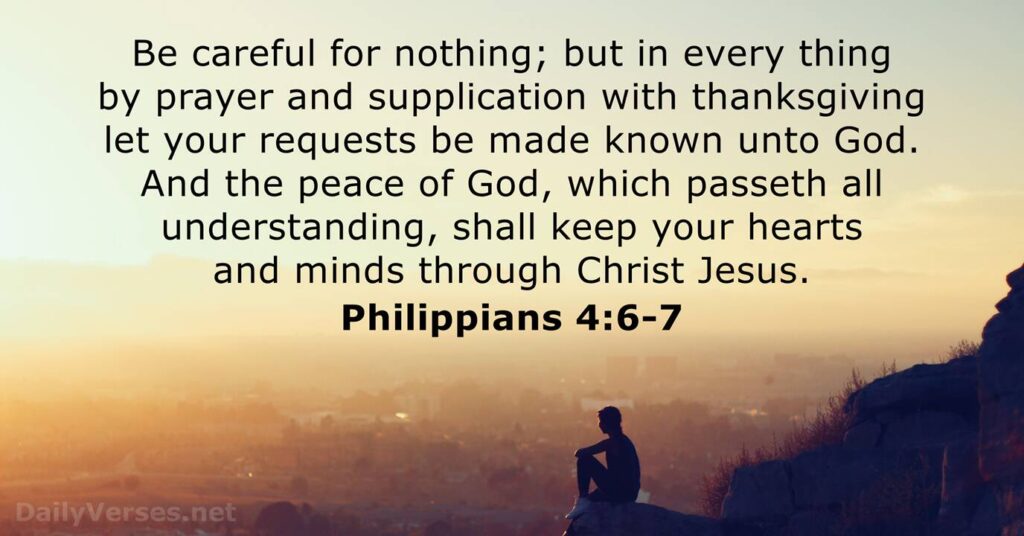
Submission to God’s will brings freedom and peace. Philippians 4:6-7 speaks to the peace of God that guards our hearts when we submit our anxieties to Him. By surrendering our worries and trusting in God’s plan, we can find true peace and contentment. Submission is not about losing control but about gaining a sense of purpose and direction in our lives.
Practical Example: Think about a situation where you must make a major life decision. This could be a career change or a move to a new city. Instead of relying solely on your own understanding, you submit the decision to God through prayer and seek His guidance. By trusting in His plan, you experience peace and confidence, knowing that He is leading you in the right direction.
3. Practical Applications
Identifying specific areas in our lives where we need to deny ourselves is crucial. This could involve our time, resources, or relationships. Romans 12:1-2 calls for presenting our bodies as living sacrifices and not conforming to the world. By making conscious choices to prioritize our spiritual growth, we can live a life that is pleasing to God.
Practical Example: If you find yourself spending excessive time on social media, set limits on your screen time. Use that time for more meaningful activities. Consider volunteering, spending time with family, or engaging in community service. This shift in focus helps you align your actions with your spiritual values.
4. Community Aspect of Submission
Submission to God also involves submission to one another in love. Ephesians 5:21 encourages mutual submission among believers. By supporting and uplifting each other, we can create a strong and loving community that reflects God’s love.
Practical Example: In a church setting, mutual submission might involve actively listening to others’ needs and offering help and support. For instance, if a fellow church member is going through a difficult time, you might offer to pray with them. You could provide a meal. Simply being there to listen is also helpful. This act of love and support strengthens the community and demonstrates God’s love in action.
Supporting Scriptures
- Galatians 2:20: “I have been crucified with Christ; it is no longer I who live, but Christ who lives in me.” This verse supports the idea of self-denial as a transformation through Christ.
- John 12:24-25: The principle of dying to self to bear fruit aligns with the theme of denial.
- 1 Peter 2:24: Christ bore our sins in His body on the tree, encouraging believers to live for righteousness.
- Mark 8:34 and Matthew 10:38: These passages reinforce the idea that following Christ requires a willingness
13 biblical ways we should deny ourselves.
from 13 Biblical Ways to Deny Yourself – Hope Nation
1. We give up the right to take revenge (Rom. 12:19–20)
Romans 12:19–20 (NLT) “Dear friends, never take revenge. Leave that to the righteous anger of God. For the Scriptures say, ‘I will take revenge; I will pay them back,’ says the Lord. Instead, “‘f your enemies are hungry, feed them. If they are thirsty, give them something to drink. In doing this, you will heap burning coals of shame on their heads.’”
2. We give up the right to have a comfortable, secure home (Luke 9:57–58)
Luke 9:57–58 (NLT) “As they were walking along, someone said to Jesus, ‘I will follow you wherever you go.’ But Jesus replied, ‘Foxes have dens to live in, and birds have nests, but the Son of Man has no place even to lay his head.’”
3. We give up the right to a good reputation (Matt. 5:11)
Matthew 5:11 (NLT) “God blesses you when people mock you and persecute you and lie about you and say all sorts of evil things against you because you are my followers.”
4. We give up the right to spend money however we please (Matt. 6:19–21)
Matthew 6:19–21 (NLT) “Don’t store up treasures here on earth, where moths eat them and rust destroys them, and where thieves break in and steal. Store your treasures in heaven, where moths and rust cannot destroy, and thieves do not break in and steal. Wherever your treasure is, there the desires of your heart will also be.”
5. We give up the right to hate an enemy (Matt. 5:43–47)
Matthew 5:43–47 (NLT) “You have heard the law that says, ‘Love your neighbor’ and hate your enemy. But I say, love your enemies! Pray for those who persecute you! In that way, you will be acting as true children of your Father in heaven. For he gives his sunlight to both the evil and the good, and he sends rain on the just and the unjust alike. If you love only those who love you, what reward is there for that? Even corrupt tax collectors do that much. If you are kind only to your friends, how are you different from anyone else? Even pagans do that.”
6. We give up the right to be honored and served (Mark 10:42–45)
Mark 10:42–45 (NLT) “So Jesus called them together and said, ‘You know that the rulers in this world lord it over their people, and officials flaunt their authority over those under them. But among you it will be different. Whoever wants to be a leader among you must be your servant, and whoever wants to be first among you must be the slave of everyone else. For even the Son of Man came not to be served but to serve others and to give his life as a ransom for many.’”
7. We give up the right to understand God’s plan before we obey him (Heb. 11:8)
Hebrews 11:8 (NLT) “It was by faith that Abraham obeyed when God called him to leave home and go to another land that God would give him as his inheritance. He went without knowing where he was going.”
8. We give up the right to live by our own rules (John 14:23–24)
John 14:23–24 (NLT) “Jesus replied, ‘All who love me will do what I say. My Father will love them, and we will come and make our home with each of them. Anyone who doesn’t love me will not obey me. And remember, my words are not my own. What I am telling you is from the Father who sent me.’”
9. We give up the right to hold a grudge (Col. 3:13)
Colossians 3:13 (NLT) “Make allowance for each other’s faults, and forgive anyone who offends you. Remember, the Lord forgave you, so you must forgive others.”
10. We give up the right to complain (Phil. 2:14, 1 Thess. 5:18)
Philippians 2:14 (NLT) “Do everything without complaining and arguing,”
1 Thessalonians 5:18 (NLT) “Be thankful in all circumstances, for this is God’s will for you who belong to Christ Jesus.”
11. We give up the right to put self first (Phil. 2:3–4)
Philippians 2:3–4 (NLT) “Don’t be selfish; don’t try to impress others. Be humble, thinking of others as better than yourselves. Don’t look out only for your own interests, but take an interest in others, too.”
12. We give up the right to express one’s sexuality freely (1 Cor. 6:18–20)
1 Corinthians 6:18–20 (NLT) “Run from sexual sin! No other sin so clearly affects the body as this one does. For sexual immorality is a sin against your own body. Don’t you realize that your body is the temple of the Holy Spirit, who lives in you and was given to you by God? You do not belong to yourself, for God bought you with a high price. So you must honor God with your body.”
13. We give up the right to rebel against authority (1 Peter 2:13–15)
1 Peter 2:13–15 (NLT) “For the Lord’s sake, submit to all human authority—whether the king as head of state, or the officials he has appointed. For the king has sent them to punish those who do wrong and to honor those who do right. It is God’s will that your honorable lives should silence those ignorant people who make foolish accusations against you.”